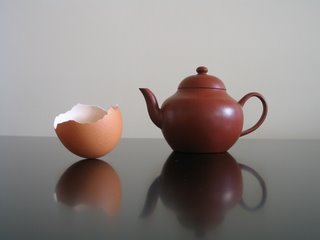
Joyeuses Pâques !
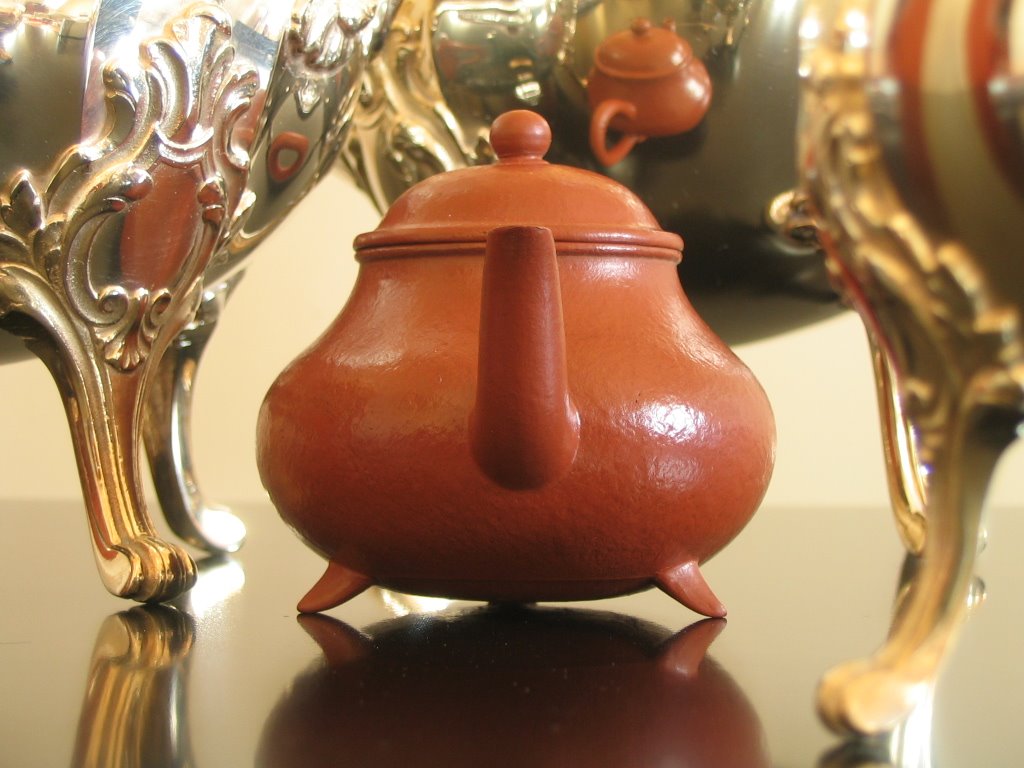
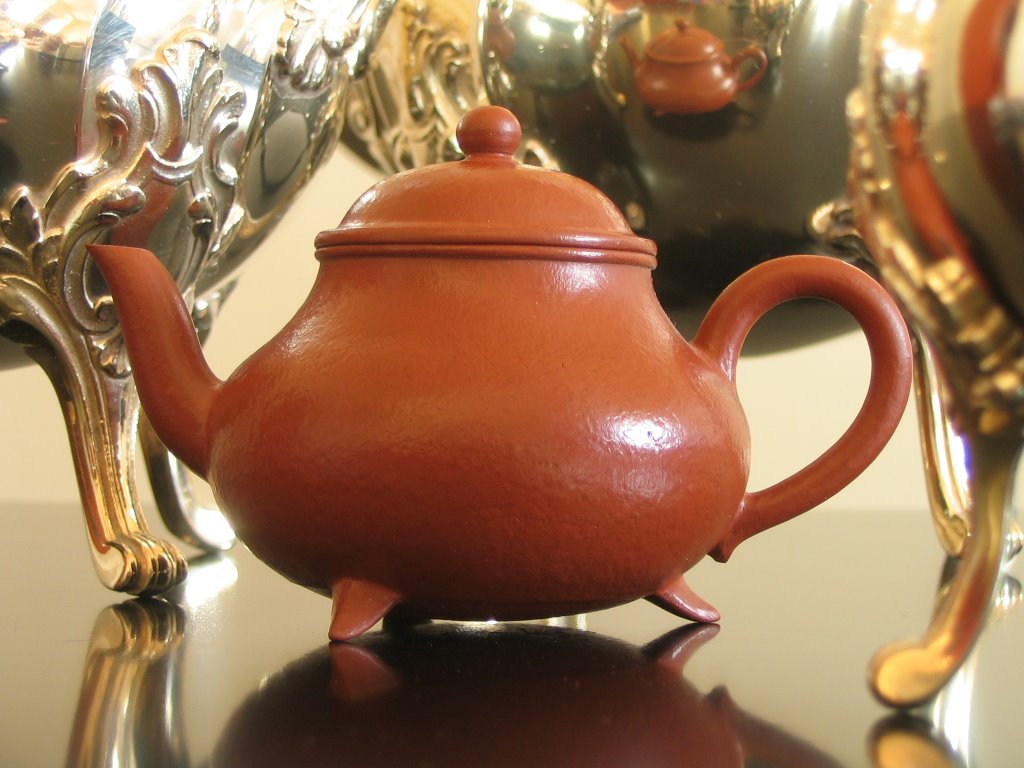
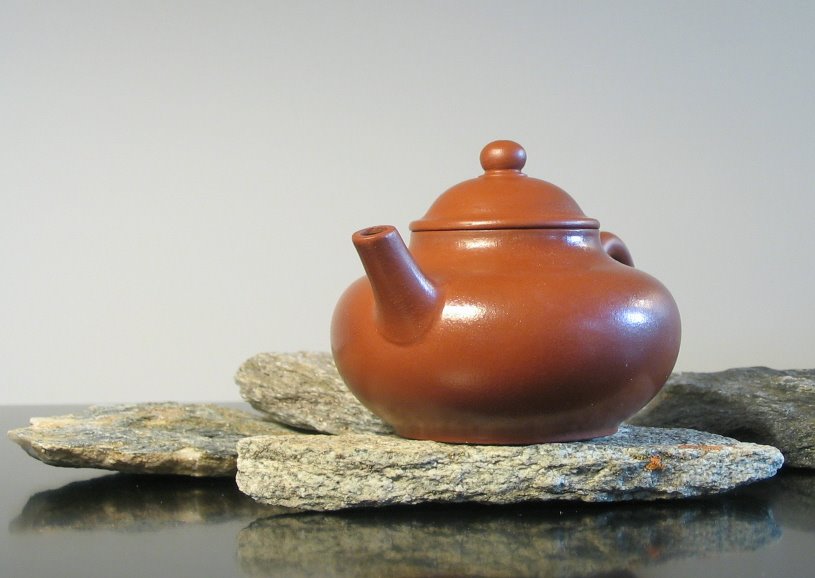
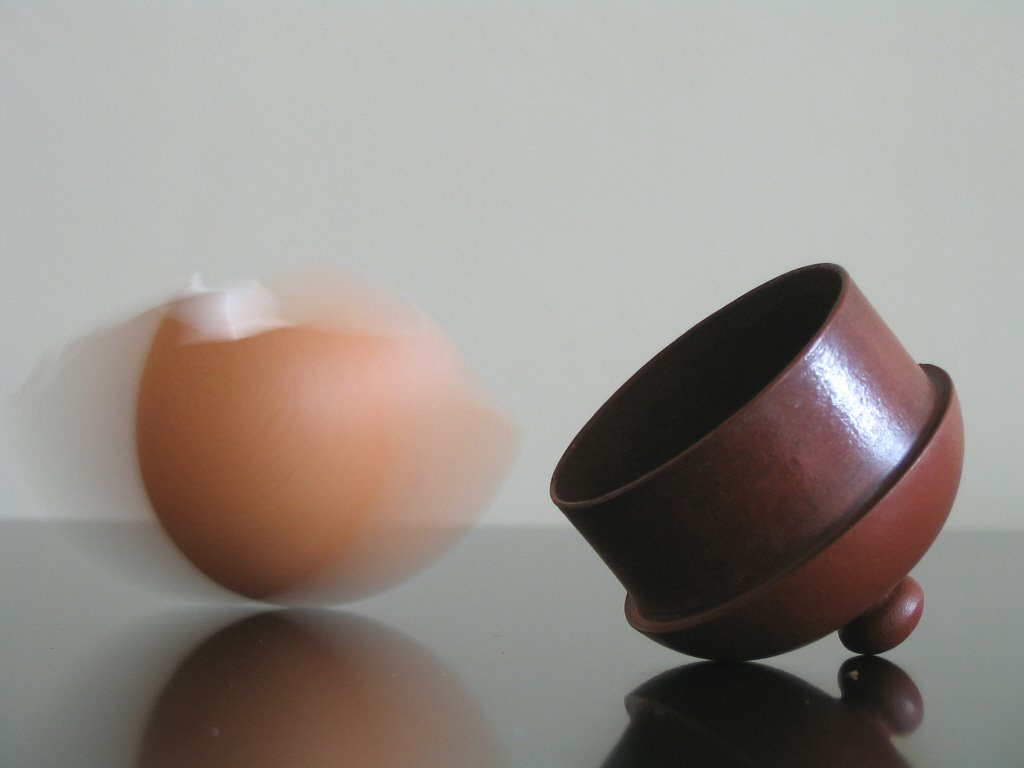
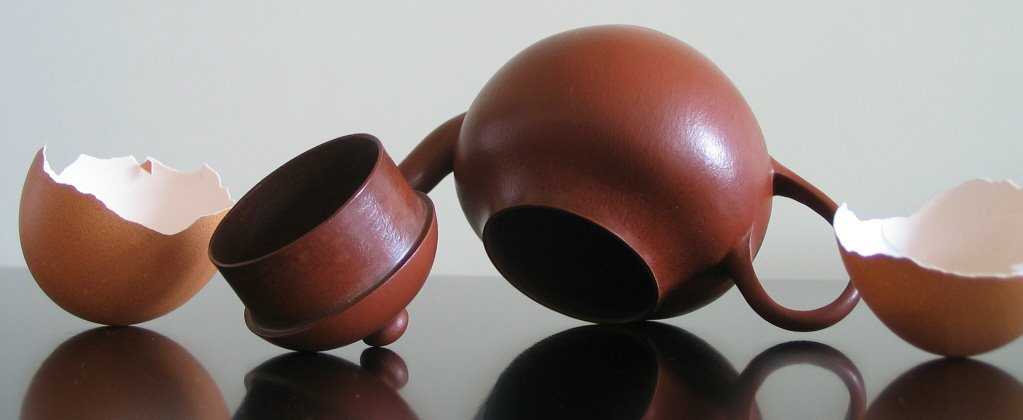
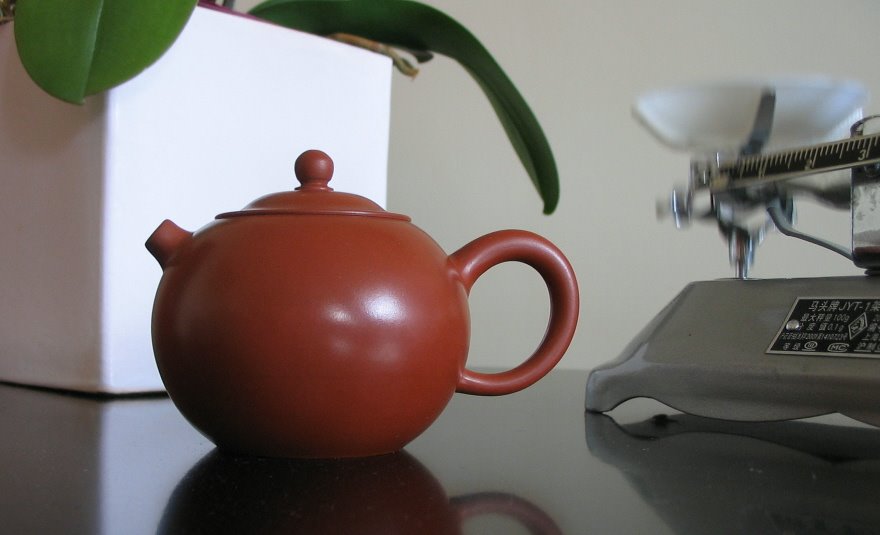
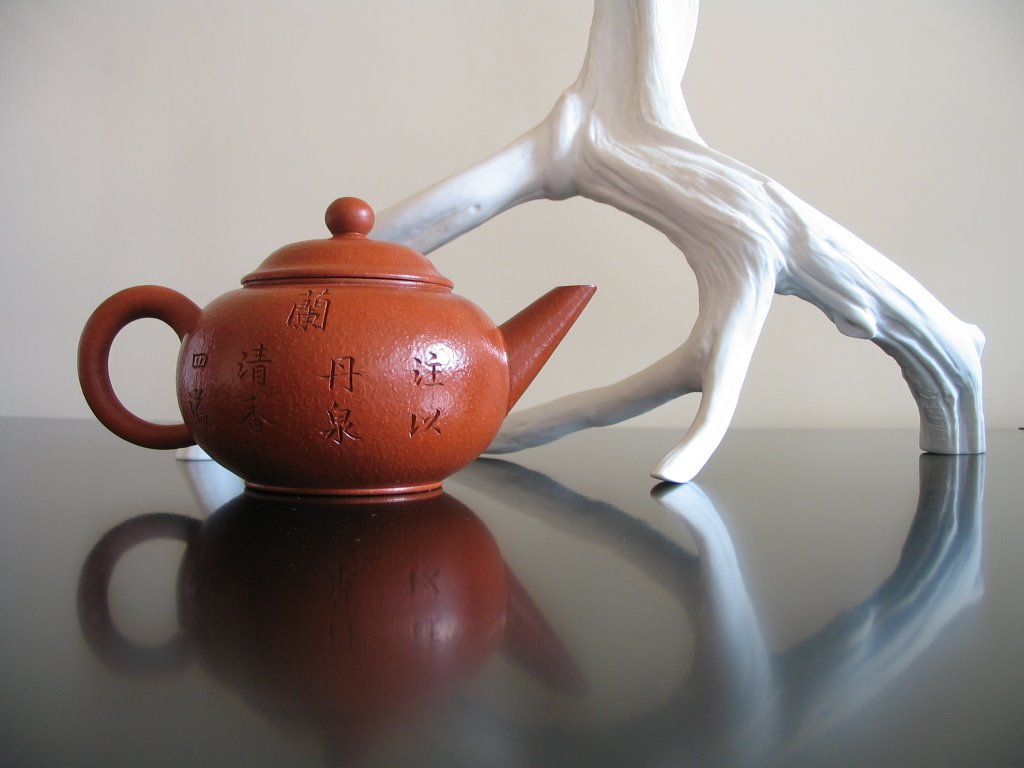
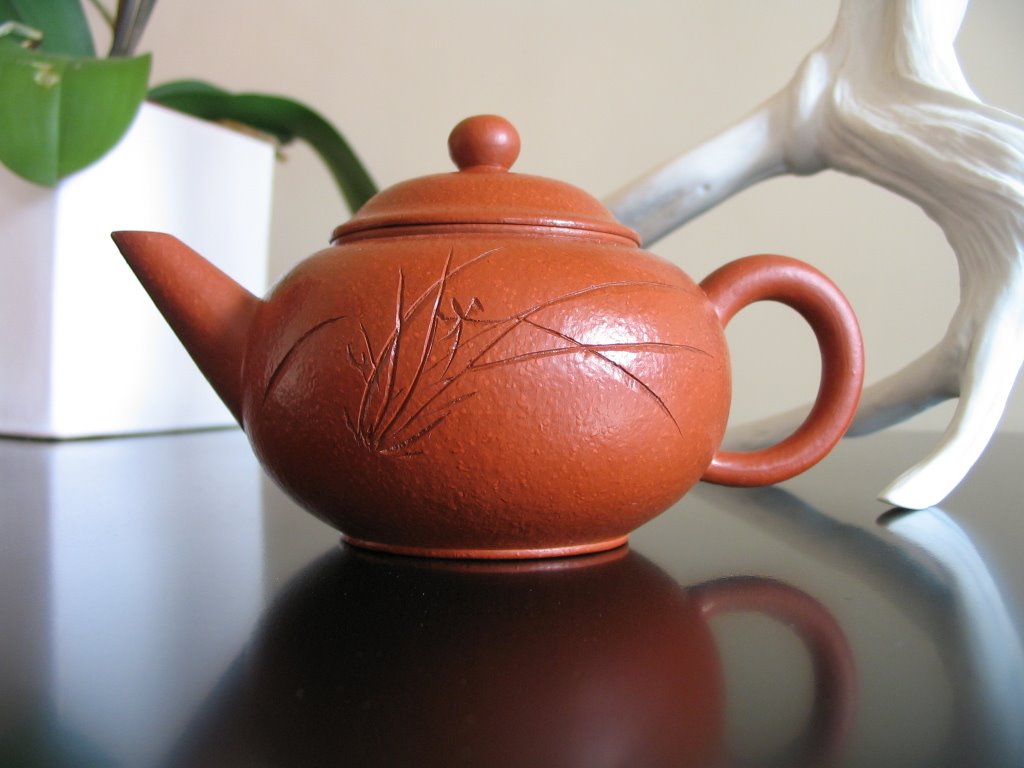
Et oui quoi de mieux qu’une vénérable Yixing « coquille d’œuf » pour ce lundi de Pâques ?
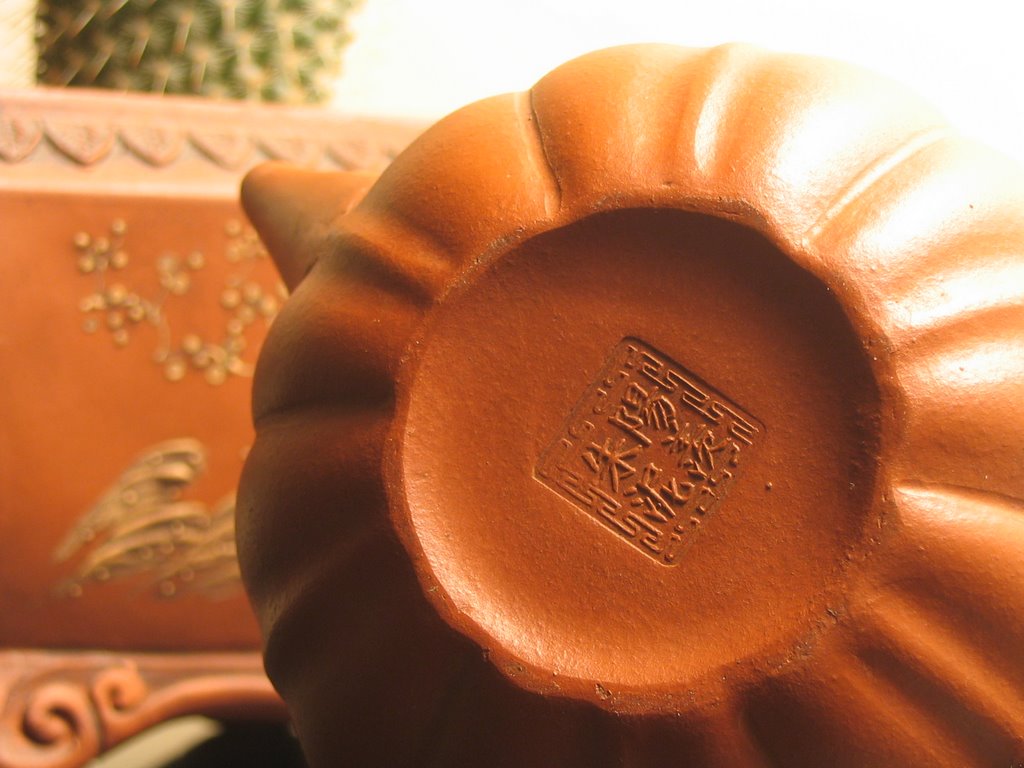
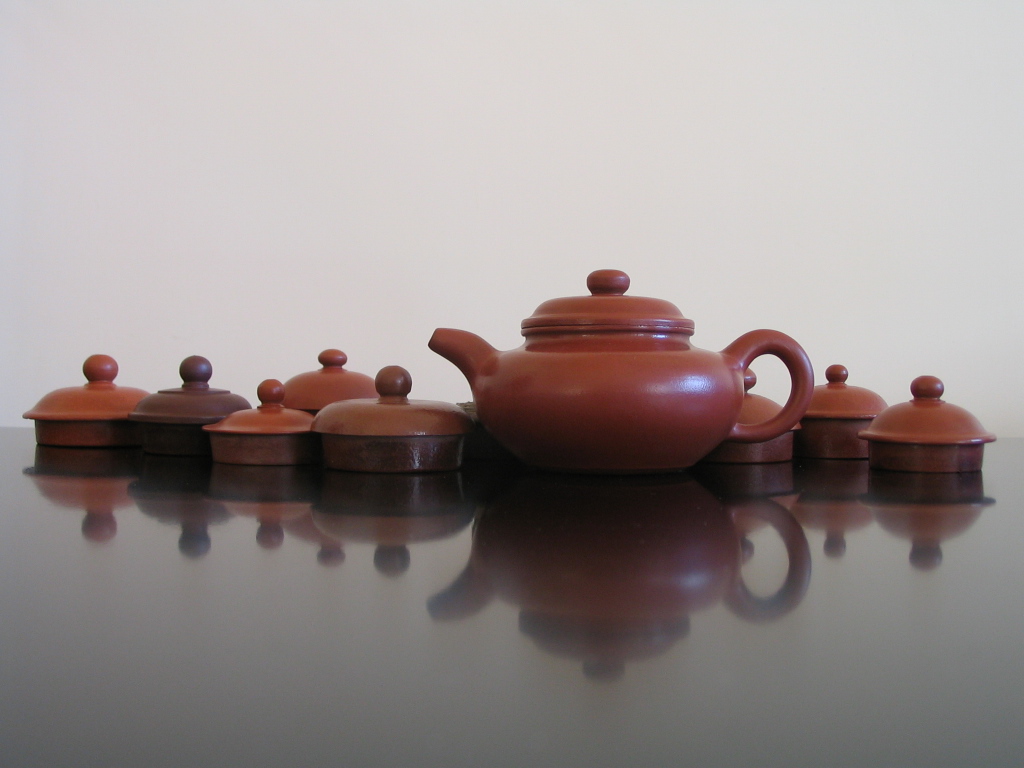
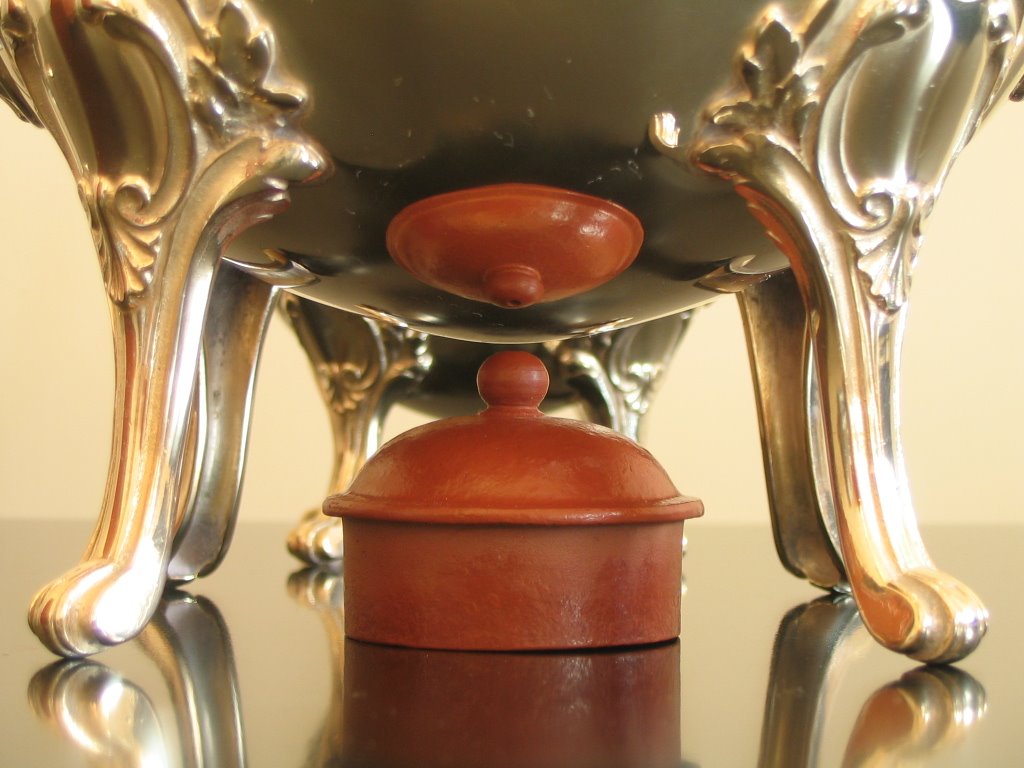
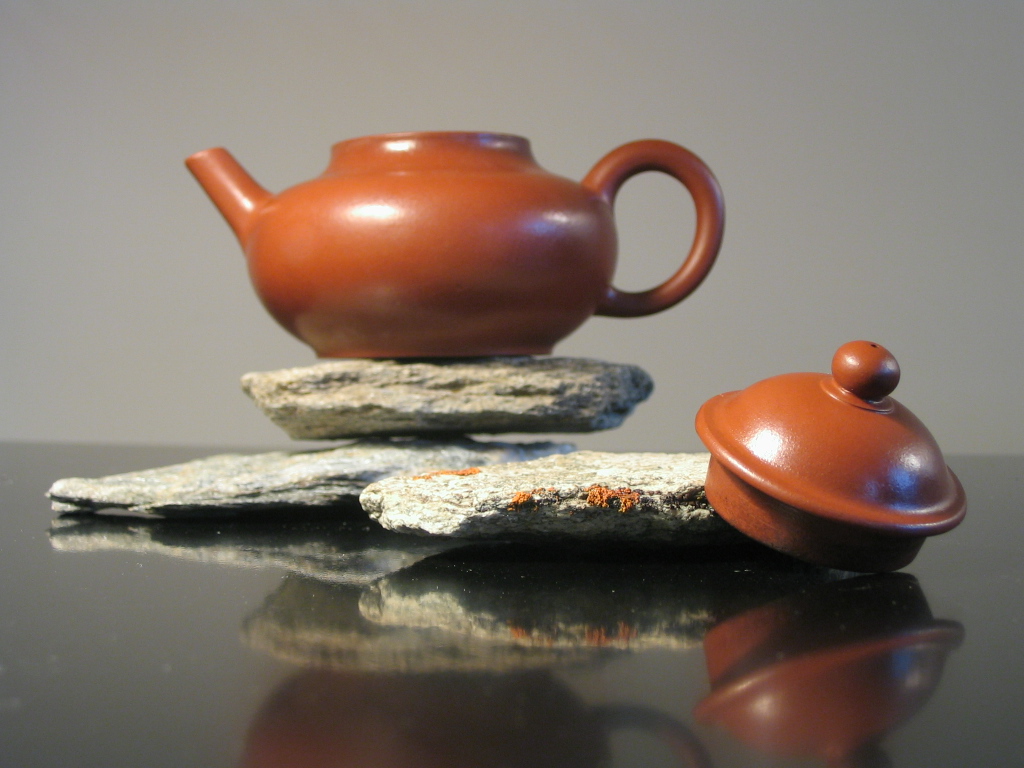
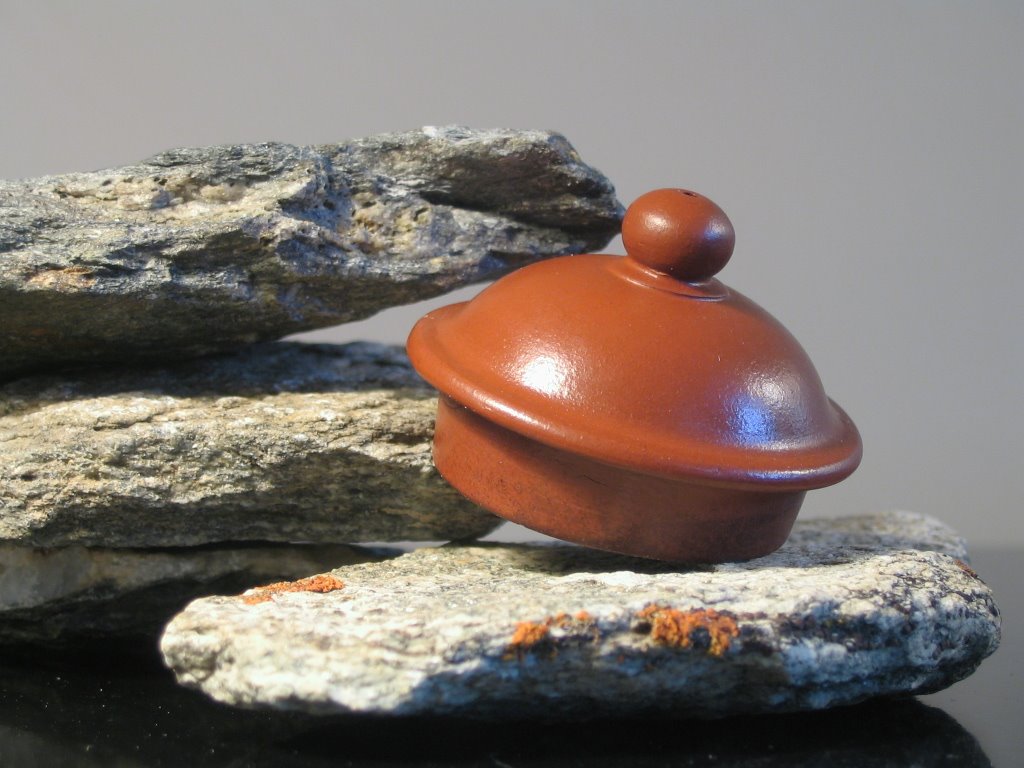
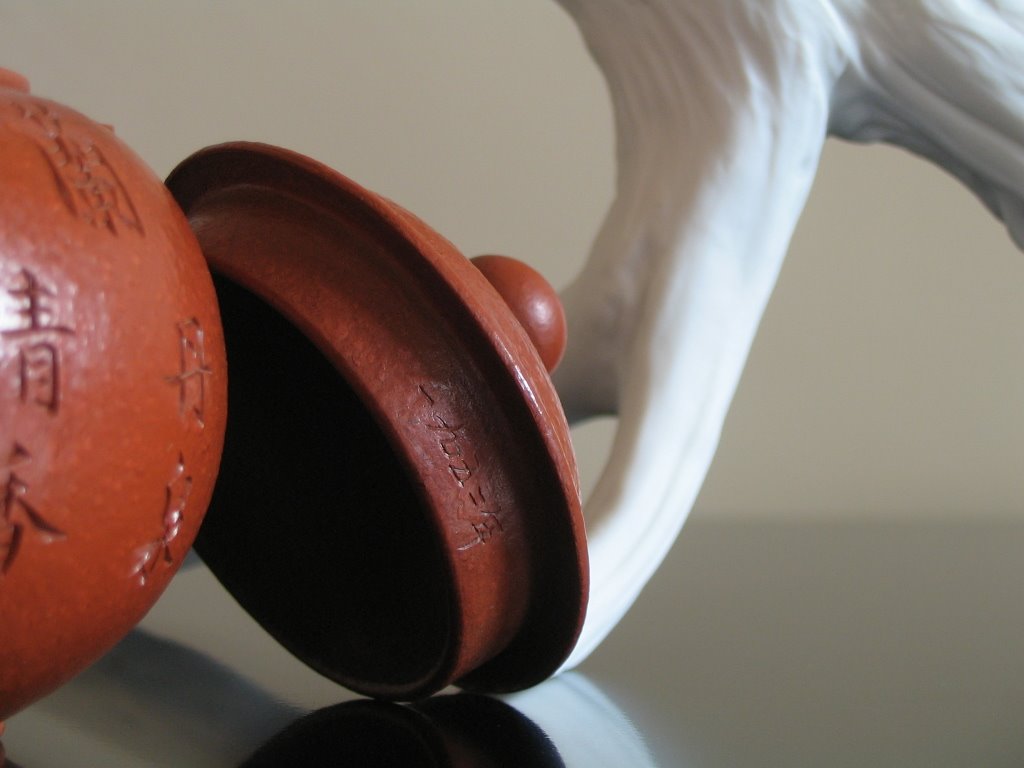
La finesse des parois est exceptionnelle, tout comme l’est (j’adore ça) la hauteur peu commune des parois internes du couvercle. Autant vous dire que « ça sonne haut » ! Et même si le tintement métallique que produit le couvercle sur le corps de la théière n’est pas spécialement un gage de qualité (plutôt un signe d’une haute température de cuisson, et de toute façon, cela dépend de la terre utilisé…) j’éprouve toujours une petite satisfaction à jouer avec…(le couvercle j’entends…).
Il va de soit qu’une terre d’une telle qualité appelle des thés peu fermentés, des Dan Cong par exemple, afin d’extraire toutes les fragrances que recèlent ces Wulong.
La finesse du grain et les traînées particulières me laissent à penser qu’il s’agit d’une véritable « Zhu Ni », et j’emploie ce terme avec prudence car il est clairement galvaudé. Aucune autre de mes théières ne présentent ce type de marques et son aspect colle parfaitement à la description que fait Billy Mood de la vraie terre « Zhu Ni », mais je peux me tromper…
Differentiating Zhu Ni From Red Clay
For the untrained eyes, it is extremely difficult or even impossible to tell apart a zhu ni teapot from a red clay teapot. Zhu ni clay has properties or characteristics that are distinctively different from red clay and can only be apparent after the pot has been used for some time. No one is going to let you use a zhu ni teapot for 6 months to confirm that it is indeed of zhu ni clay before paying up.Therefore I have listed below some pointers which you would give you some idea what to look for:
• zhu ni clay is extremely pure and does not contain any impurities because the water method was used to segmentate the layer of finest quality zhu ni from the raw red clay. You will notice that the zhu ni clay is homogenous with little or no foreign particles. It also exhibit have that "wet look" and silky feel. Zhu ni teapots may share the same characteristics despite being few centuries apart in age, but its surface properties maybe different. Pre-1850s zhu ni clay teapots usually have large particles size but those between 1850s to 1940s are extremely fine and under hotwater, the reflections of the surface of the pot is exactly like that of butter.
• Due to the tools used, zhu ni pots tend to have "crawl marks" on its surface. It can be seen when light is reflected off the surface at an angle, but you cannot feel it with your finger. Although such marks are also present in zisha teapots, it is more commonly seen in zhu ni teapots before 1960s.
• All zhu ni teapots are small in size because zhu ni itself does not have strong bonding strength as zisha. If you come across zhu ni teapots that are large in size, then you can be sure that some zisha clay has been added to "borrow" its strength.
The above points only served as a guide and if you think that just based on the above, it would be easy to recognise a zhu ni teapot then you couldn't be further from the truth. It take me 3 solid days to discover what constitue "crawl marks" on my zhu ni pots. To make matter worse, not all zhu ni teapots exhibit these telltale signs.
To a tea connoisseur, zhu ni teapots are a definite bonus because the extremely fine and pure clay has resulted in lower air cavities compared to zisha. This means that zhu ni has less ability to maintain the heat which in turns allow the fragrance of the tea to be more easily released. The result? A more fragrant tea!
Je vous conseille d’ailleurs la lecture du site de Billy Mood qui regorge d’informations intéressantes que je reprendrai lorsque l’occasion se présentera.
http://terebess.hu/english/yixing1.html
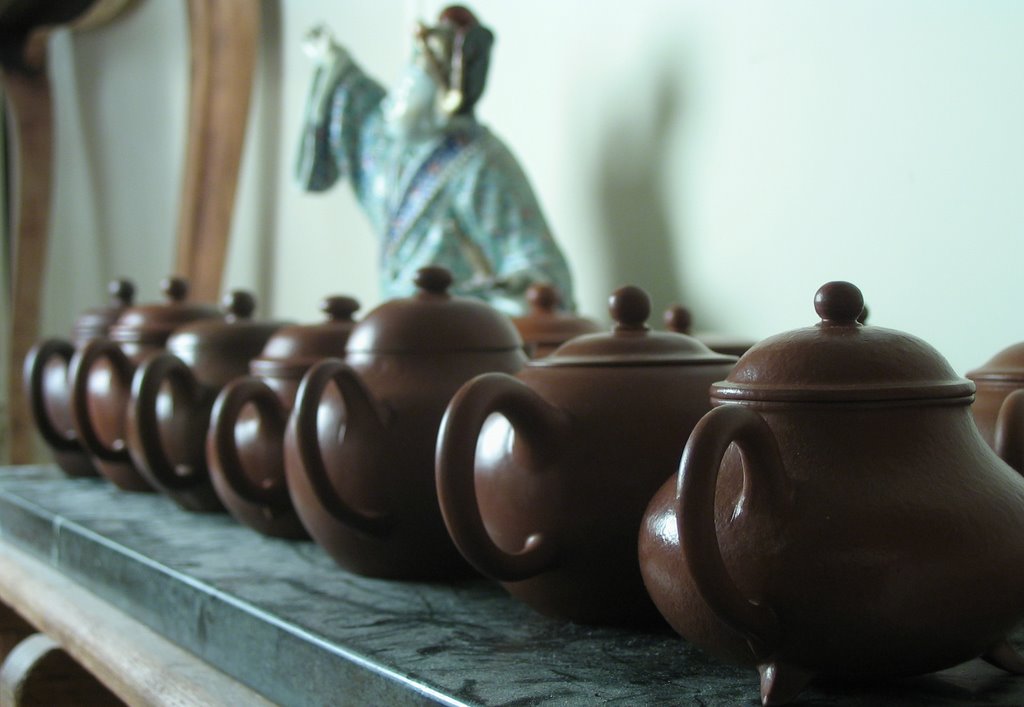
 Comme ce blog s'appelle "Pu-Erh & Yixing" il faut bien que je colle une photo de théière de temps en temps...